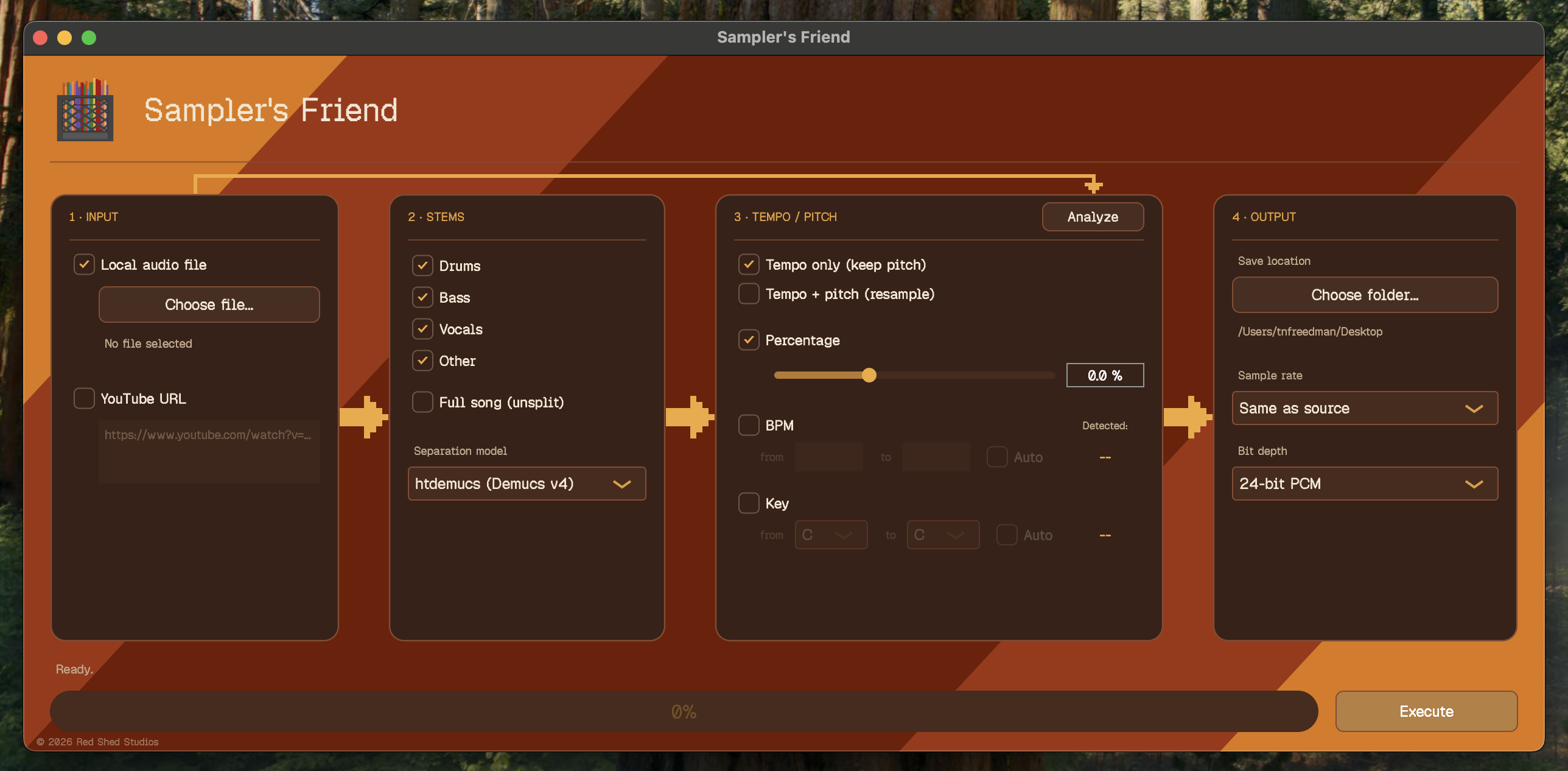
Sampler's Friend is a JUCE based audio application that facilitates basic sample acquisition and processing. If you've ever had to wade through a sea of ads and janky websites to download audio from YouTube or split stems out from a track, Sampler's Friend provides a fast, free, and reliable way of doing it all in one place. It also includes a tempo/pitch adjustment module with auto key and BPM detection, so you can go from local file or YouTube URL to high quality, key and tempo matched stems in seconds.
Click here to download Sampler's Friend and read more about the app.
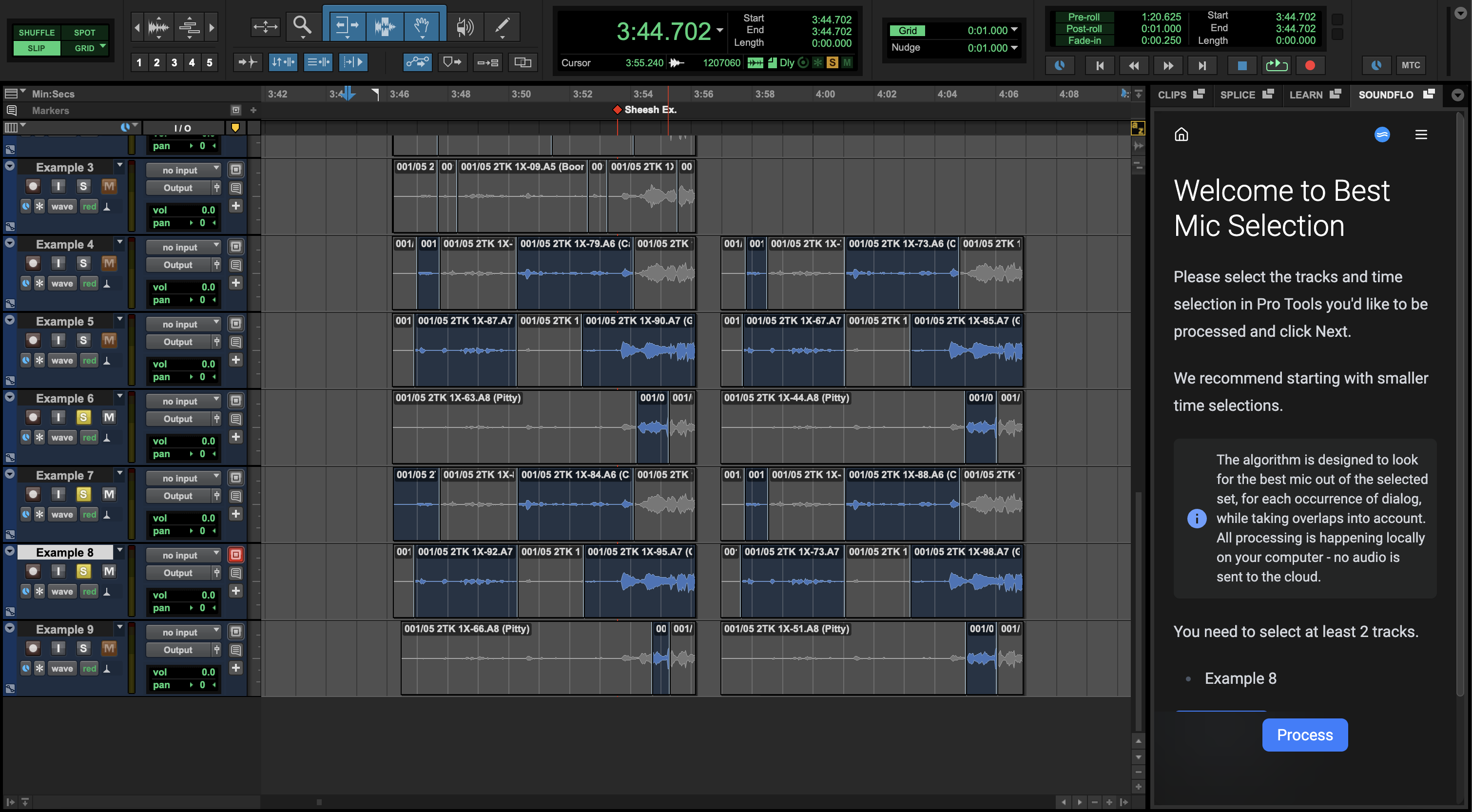
The Soundflow select the best mic tool is an hybrid ML/traditional DSP based algorithm for choosing the optimal microphone for each line of recorded film, TV, or podcast dialog. Following Soundflow's integration with Avid, the select the best mic tool is accessible directly in your Pro Tools sessions. I am proud to have been the lead developer and researcher for this tool under the guidance of the wonderful team at Soundflow!
To learn more about the select the best mic feature, visit Avid's announcement here.
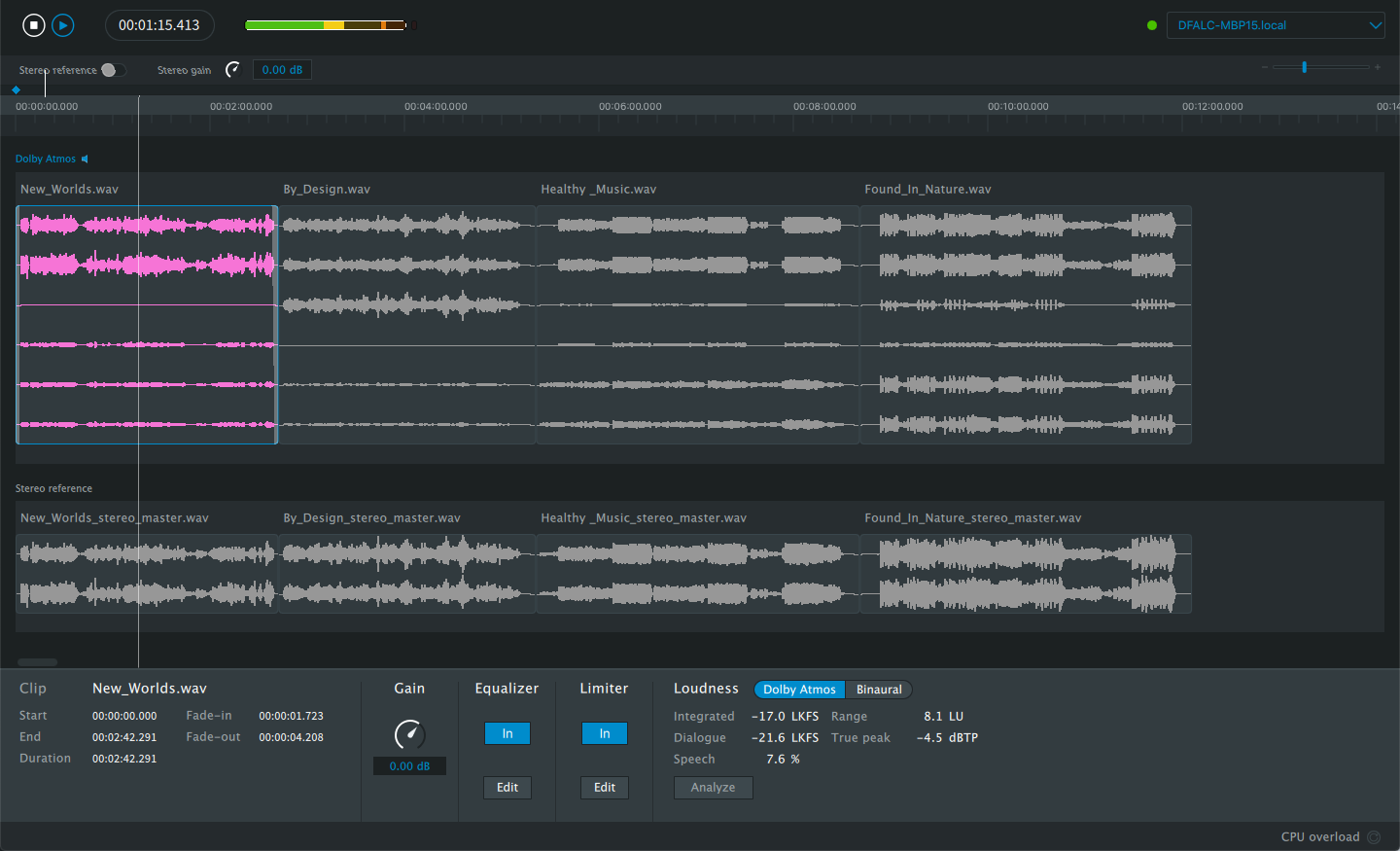
A script for the Soundflow platform which automates loudness analysis in the Dolby Atmos Album Assembler. I wrote this alongside Dolby Atmos mix engineer Luke Argilla to address a pain point in his workflow — for projects with many tracks or particularly long ones, individually analyzing each track can be prohibitively time consuming. With this script, an Atmos mastering engineer can set up their DA3 session and walk away while every track is analyzed.
The code is hosted on my Github. Feel free to use it, tweak it, and let me know if it's helped you!
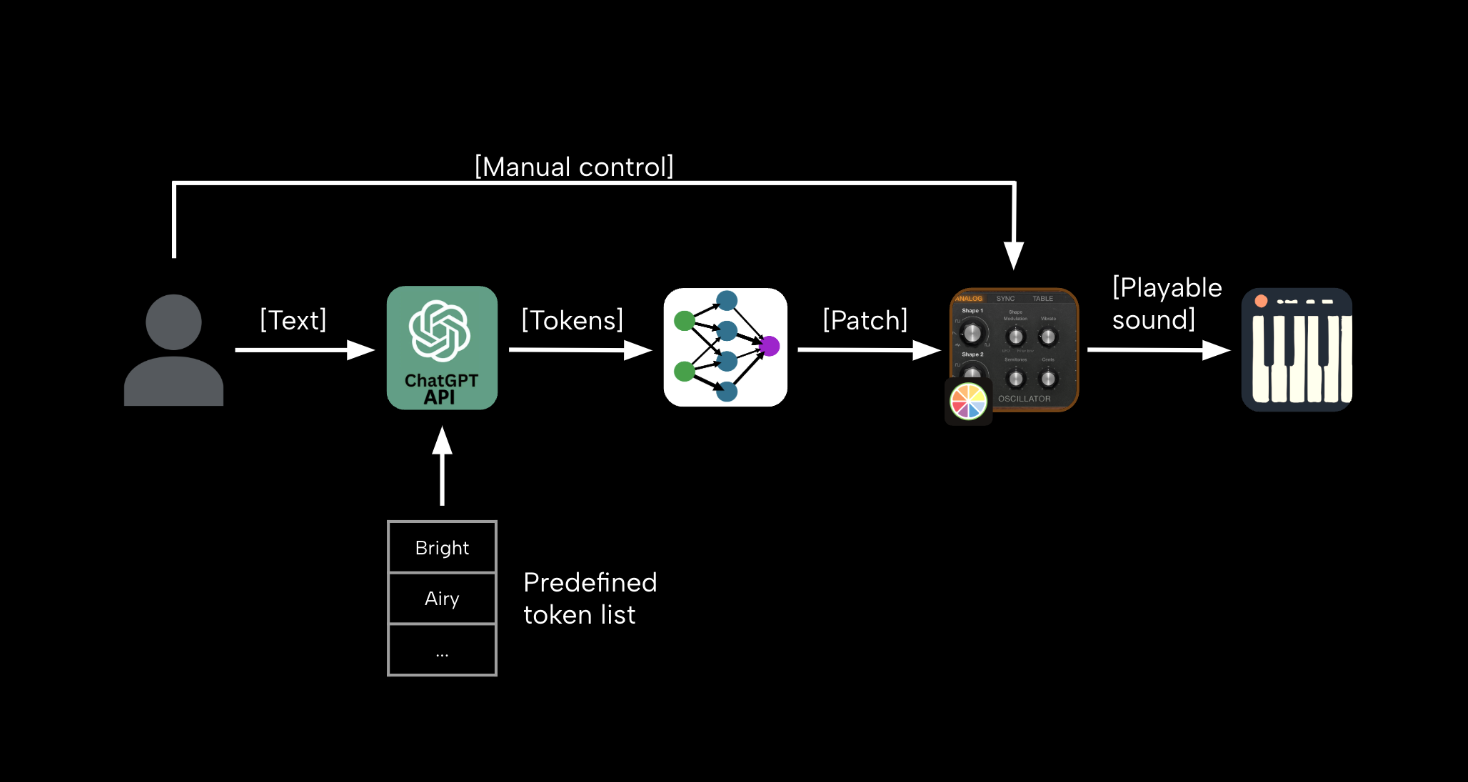
Text2Synth is a wrapper for existing synthesizer plugins that lets users generate synth patches from qualitative text descriptions. The system uses Soundflow for DAW integration and a fine-tuned GPT model for patch generation — we found that LLMs generally outperformed more specialized text/audio models like CLAP at significantly lower development cost.
My goal is not to replace traditional sound design, but to give artists of all experience levels the ability to experiment intuitively with new synth patches while retaining full technical autonomy. Thanks to generous contributions from Arturia, a full demo exists using the Arturia Prophet-V plugin. The code isn't published, but feel free to reach out if you'd like to try it or discuss the project!
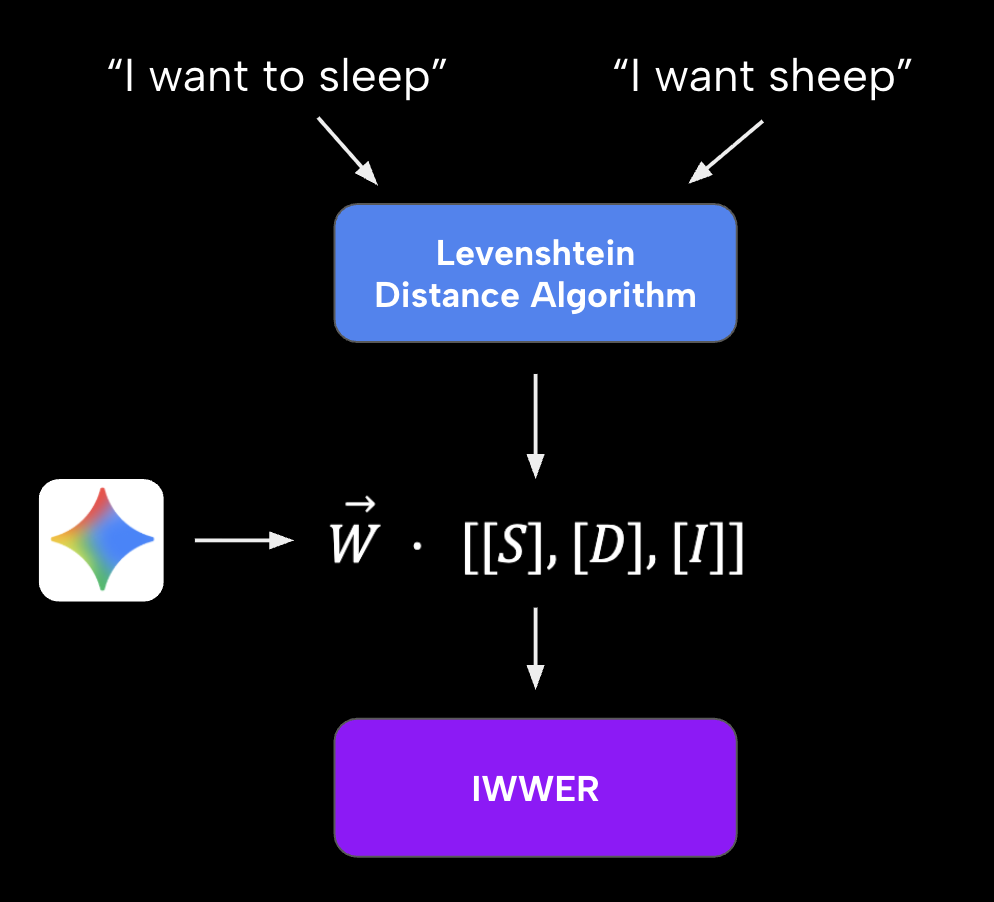
Word error rate (WER) is a standard metric for evaluating automatic speech recognition models, computed as (S+D+I) / N — substitutions, deletions, and insertions divided by total reference words. It is computationally simple but treats all errors as equal, failing to capture the true perceptual quality of a transcript.
This Python notebook explores an "Information Weighted Word Error Rate" that weights each error by the semantic relevance of the mispredicted word. After computing an alignment matrix via the Levenshtein Distance Algorithm, the Gemini API generates a semantic relevance weight vector. IWWER is then the weighted sum of errors normalized by reference word count.
The code is hosted on my Github — more of an exploration than a production tool, but feel free to check it out!